
Brake Repair & Brake Change in Burbank, CA
Every other system in your car exists to make it go. The brakes are the only one built to make it stop, and they do that job by turning motion into heat, over and over, thousands of times between services. That workload is why brake parts are designed to wear out, and why the wear is supposed to be caught and corrected before it turns into a problem. At Burbank Automotive, brake service is one of the things we do most often and know best. Whether you need a straightforward pad change, a full brake overhaul, or an honest answer about a noise you’ve been hearing, our technicians will inspect the entire system and tell you exactly what it needs.
How Your Brakes Actually Wear
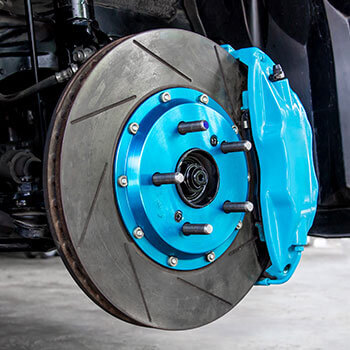
Most cars on the road today use disc brakes on all four wheels, though some older and smaller vehicles still carry drum brakes at the rear. When you press the pedal, brake fluid pushes a caliper piston that clamps a pair of brake pads against a spinning rotor. The friction slows the wheel, and the energy leaves as heat.
The pads are the sacrificial part. Their friction material is meant to wear down, and a typical set lasts anywhere from 25,000 to 60,000 miles depending on the vehicle, the pad compound, and how it’s driven. Stop-and-go traffic on Burbank Boulevard or the 5 wears pads far faster than freeway cruising. Rotors wear too, more slowly, and can warp from heat or develop grooves once the pads get thin. Brake fluid absorbs moisture over time, which lowers its boiling point and quietly reduces stopping power. Calipers can seize, hardware can corrode, and rubber lines can soften. A proper brake service accounts for all of it, not just the pads.
What a Brake Service at Burbank Automotive Includes
We begin every brake job with a full inspection rather than a guess. Each wheel comes off so we can measure pad thickness, check rotor thickness and runout against the manufacturer’s minimum specification, look at the calipers and slide pins for sticking or corrosion, examine the hoses and lines for cracks or seepage, and test the condition of the brake fluid. We also check the parking brake and, on vehicles that have them, the rear drums and shoes.
From there we tell you what’s worn, what’s fine, and what can safely wait. If the rotors are still within specification and true, we’ll resurface or reuse them and replace only the pads. If they’re below the minimum or warped, we’ll recommend replacement, because installing new pads on a bad rotor wastes both. We use quality pads matched to your vehicle and your driving, whether that means quiet, low-dust ceramic pads for a daily commuter or a semi-metallic compound for a heavier truck or SUV that tows.
Every job finishes with new hardware where needed, properly lubricated slide pins and contact points, a fluid top-off or full flush if the fluid tests bad, and a road test to confirm the brakes are quiet, straight, and firm before the car goes back to you.
Brake Fluid: The Part Everyone Forgets
Brake fluid is hygroscopic, which means it pulls moisture out of the air through the lines and seals. After two or three years, that moisture can drop the fluid’s boiling point enough that hard or repeated braking, like a long descent down the Angeles Crest or a few sharp stops in traffic, creates vapor in the lines and a pedal that suddenly goes soft. Moisture also corrodes the inside of calipers and ABS components. Most manufacturers recommend a brake fluid exchange every two to three years regardless of mileage, and we test fluid condition on every brake inspection so you know where yours stands.
Signs Your Brakes Need Attention
A burning smell after driving, especially on hills, which may mean a caliper is dragging
A grinding noise in particular should not wait. Once the pads are gone, every stop is cutting into the rotor, and a job that would have cost a set of pads can quickly become pads, rotors, and sometimes a caliper.
Why Drivers Trust Us With Their Brakes
Burbank Automotive has served drivers in Burbank and the surrounding communities since 2005. Our ASE-certified technicians work on all makes and models, foreign and domestic, including hybrids and diesels, and we keep the most common brake components in stock so the majority of brake jobs are completed the same day. We’ll show you the worn parts, explain the measurements, and give you a clear estimate before any work starts. If something doesn’t need replacing yet, we’ll tell you that too.
Brake Repair Serving Burbank, Glendale and Los Angeles
If your brakes are squealing, grinding, pulsing, or just overdue for a look, don’t put it off. Burbank Automotive provides complete brake inspection, brake pad and rotor replacement, caliper repair, and brake fluid service for drivers in Burbank, Glendale, North Hollywood, Studio City, and throughout Los Angeles. Call us at (818) 567-4218 or book an appointment online and we’ll get you stopping safely again.